Can you refuse a UK roadside drug test? Penalties and defences explained
No — refusing a UK roadside drug test is itself a criminal offence under section 6 of the Road Traffic Act 1988, and the penalty structure mirrors the drug driving offence under section 5A: a minimum 12-month driving ban, an unlimited fine, up to six months in prison, and a criminal record that lasts 11 years on your driving licence and far longer on the wider record. The only statutory defence to refusal is a "reasonable excuse", which the courts read narrowly. Refusing the roadside swab does not stop the police taking a blood sample from you at the station, and it does not improve your position in court.

 4.6Top Rated Service 2026verified by TrustindexTrustindex verifies that the company has a review score above 4.5, based on reviews collected on Google over the past 12 months, qualifying it to receive the Top Rated Certificate.


High
Client’s Success
0
Successful Cases
Start Today
Enter your details below for a free initial call.
High Success Rate
No Hidden Charges
A Truly Personal Touch
Language Support
If you have refused a test, or are facing a “failure to provide specimen” charge, see the drug driving defence team — or read on for the law, the penalties, and the defences in detail.
What does UK law say about refusing a roadside drug test?
Two sections of the Road Traffic Act 1988 govern drug testing in the UK, and they do different jobs.
Section 6 covers preliminary tests — the roadside checks an officer can require where they reasonably suspect a driver of being unfit through drink or drugs, or where the driver has been involved in an accident or committed a moving traffic offence. The preliminary drug test is normally a saliva swab using a device like the DrugWipe 5S. Under section 6 of the Road Traffic Act 1988, a person who, without reasonable excuse, fails to co-operate with a preliminary test when required to do so by a constable is guilty of an offence.
Section 7 covers the evidential stage that follows. Once a driver has been arrested, section 7 of the Road Traffic Act 1988 gives the police the power to require a sample of blood, urine or breath at the police station for analysis. Refusing or failing to provide that station specimen, again without reasonable excuse, is also an offence — and it is the more serious of the two charges, because the station specimen is the evidence the prosecution would build a substantive drug driving case on.
The two charges sit alongside the substantive offence under section 5A of the Road Traffic Act 1988, which is driving with a specified controlled drug above the legal limit. If you refuse, the prosecution cannot prove section 5A — there is no specimen to test — so the Crown Prosecution Service charges failure to provide specimen instead. The Crown Prosecution Service publishes its legal guidance on failure to provide specimens and the drug driving rules are summarised on gov.uk.
The practical effect is straightforward: the law refuses to let a driver escape liability by refusing the test. Parliament wrote the offence specifically to close that loophole, and the courts apply it strictly.
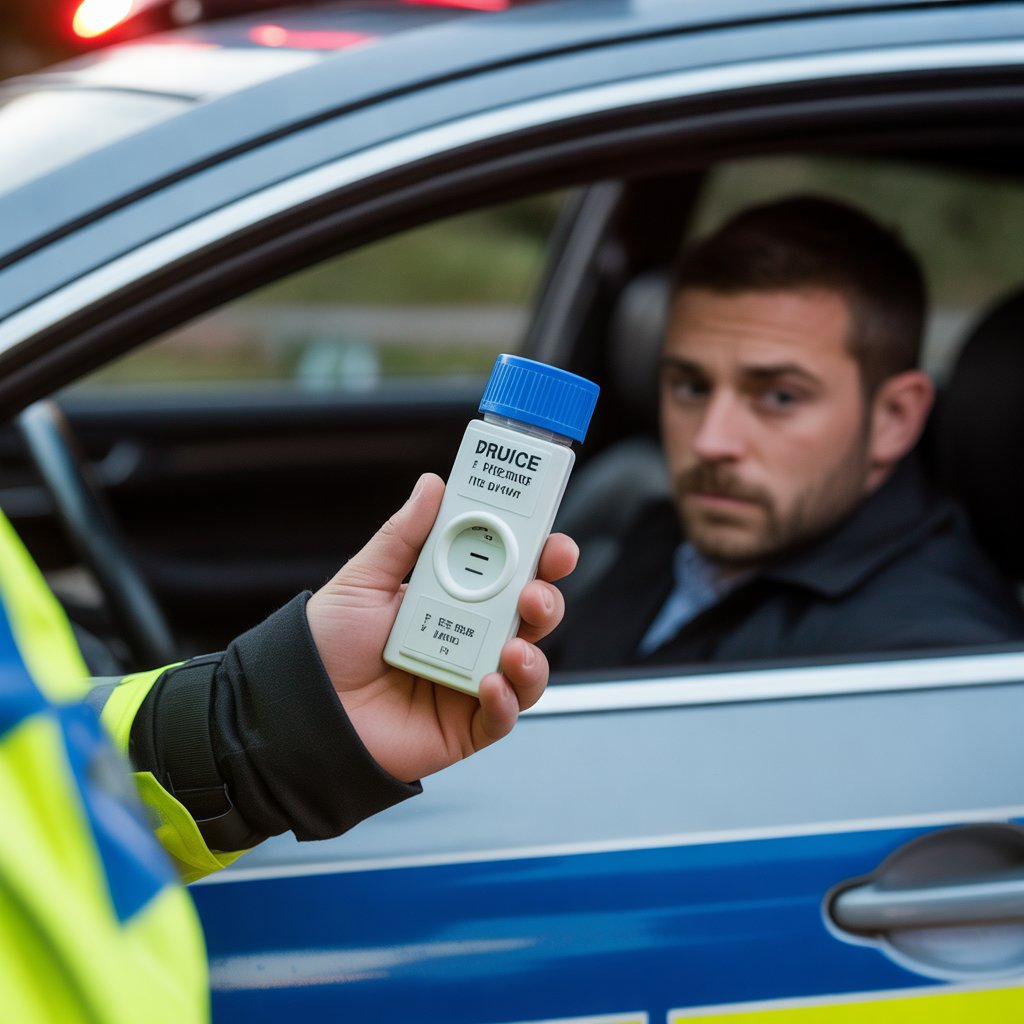
What are the penalties for refusing a UK roadside drug swab?
Failure to provide a specimen is sentenced under the [Sentencing Council guidelines on failure to provide a specimen for analysis drug driving, which apply in magistrates’ courts across England and Wales.
The sentencing starting points run from a Band C fine and 12-month disqualification at the lowest band, through a medium-level community order and a longer disqualification, up to a 26-week custodial sentence at the top band. The aggravating factors include previous convictions, evidence of unacceptable standards of driving, evidence of drug taking near the time of driving, and high levels of impairment apparent at arrest. The mitigating factors include genuine but mistaken belief that refusal was justified, medical conditions, and co-operation with the wider investigation.
In every case the minimum mandatory driving disqualification is 12 months. That is not a starting point that can be argued downward; it is a statutory minimum unless special reasons (a narrow legal test, not a sympathy plea) are made out. A conviction stays on the driving licence for 11 years from the date of conviction, and the criminal record itself remains disclosable under standard DBS rules for longer. Insurance premiums after a section 6 or section 7 conviction typically rise to two or three times the pre-conviction premium and stay elevated for at least five years.
The penalty structure was designed to mirror — and in some cases exceed — the section 5A drug driving penalties. The reasoning is plain. If refusal carried a lighter sentence, every driver who knew they were over the limit would refuse. So Parliament made refusal at least as costly as the substantive offence.
What is a "reasonable excuse" defence under Section 6?
The statutory defence to a section 6 charge is “reasonable excuse”. The courts have read this narrowly over forty years of case law, and the bar is set deliberately high.
A genuine, contemporaneous medical condition that prevents co-operation with the swab can amount to a reasonable excuse. Severe asthma at the moment the swab is taken, an oral injury that makes the swab impossible to administer, or a documented panic disorder triggered by the police interaction have all been accepted in individual cases. The condition must be real, it must be relevant to the test the officer is asking the driver to perform, and there must be some evidence of it beyond the driver’s say-so.
Equipment failure can also amount to reasonable excuse. If the officer attempted to use a device that was visibly malfunctioning, out of calibration, or being used outside its specified operating temperature range, and the driver declined to co-operate on that specific basis, a court may accept the refusal as reasonable. The defence almost always requires expert evidence on the device’s specifications, which is why it tends to succeed only when paired with a properly prepared case.
Religious or philosophical objection is not a reasonable excuse. Mistaken belief about the law is not a reasonable excuse. Fear of needles, while sometimes relevant at the station blood test stage (section 7), is rarely accepted as a reasonable excuse for refusing a roadside saliva swab, because the saliva test does not involve a needle.
The key procedural point that defence solicitors look at first is whether the officer gave the driver the statutory warning before requiring the test — namely that failure to co-operate may render the driver liable to prosecution. If that warning was not given, or was given incorrectly, the case can sometimes be challenged on procedural grounds rather than on reasonable excuse.
Refusing at the roadside vs refusing at the police station — what's the difference?
The two refusal offences look similar on paper but operate differently in practice.
Refusing the roadside test under section 6 is the lower-tier offence. The sentencing starting points are lower, the evidential threshold is lower, and the police response to a roadside refusal is to arrest the driver and take them to the station, where the section 7 power then applies. Refusing the roadside swab does not end the testing — it triggers the next stage. The custody officer at the station can then require a blood, urine or breath sample under section 7, with the same “fail to provide” consequences if the driver refuses again.
qRefusing at the station under section 7 is the more serious offence, and the station blood test procedure is governed by stricter rules on who can draw the sample, how it is stored, and how the driver is warned. Because the station specimen is the substantive evidence in any drug driving prosecution, the courts treat refusal at this stage as more culpable. The sentencing guidelines reflect that with higher starting points and a stronger steer towards custody at the top end.
A driver who refuses the roadside swab and then provides a station specimen avoids the section 7 charge but still faces the section 6 charge. A driver who provides the roadside swab (positive or negative) and then refuses the station specimen faces only the section 7 charge. A driver who refuses at both stages typically faces only the more serious section 7 charge, because the Crown Prosecution Service ordinarily prosecutes the offence that produces the higher sentence rather than both.
The most important point: refusing the roadside swab does not stop the police taking a blood sample from you. It only delays it. The arrest power exists precisely so that section 7 can be invoked once you reach custody.
When is it sensible to refuse? (Honest answer: almost never)
The question every driver asks at the roadside is whether refusing the swab improves their position. In almost every realistic scenario, the answer is no.
If you have used drugs and are over the limit, refusing the roadside test results in arrest, transport to the station, a section 7 specimen requirement, and a separate “fail to provide” charge if you refuse there too. The penalty for refusal at the station is typically as severe as the section 5A conviction would have been. You gain nothing.
If you have not used drugs and the swab would have returned negative, refusing the test guarantees arrest and a section 6 charge that you then have to defend. You gain nothing.
If you have used drugs but believe you are under the limit (for example, you used cocaine three days ago and benzoylecgonine has cleared below 10μg/L), refusing the test removes the prosecution’s evidence — but also removes your evidence. The defence to a section 5A charge often turns on the precise blood reading, the time elapsed since use, and the chain of custody on the sample. Refusing means there is no sample to argue about, and you face the refusal charge instead.
The narrow set of cases where refusal might make sense — a documented medical condition that makes the test impossible, an officer demanding a test outside the lawful triggers, an equipment failure visible at the time — are the same set of cases where a properly evidenced reasonable excuse defence might succeed. Even then, the right course is usually to co-operate with the test under protest and challenge the result later, rather than refuse and face a separate charge.
The drink driving parallel is worth noting. The same logic applies to the section 6 and section 7 powers in drink driving cases, where refusal carries the same penalty structure and the same narrow reasonable-excuse defence. The legal architecture is identical; only the chemistry differs.
How do you defend a failure to provide specimen charge?
A failure to provide specimen case is defended on one of four tracks, and the right track depends on what actually happened at the roadside or in custody.
Track one is the procedural challenge. Did the officer have lawful grounds to require the test under section 6? Was the statutory warning given in the prescribed form? Was the device used in accordance with its operating procedure? Was the driver given a real opportunity to co-operate, or was the test administered in a way that made co-operation impossible? Procedural failures are the most frequent successful ground of defence, because the police protocol is detailed and officers do not always follow it precisely.
Track two is reasonable excuse on medical grounds. This requires medical evidence — typically a GP letter, a consultant report, or a contemporaneous A&E record — supporting the condition the driver says prevented co-operation. The condition must connect causally to the specific test the officer required. Generic anxiety is rarely enough; documented panic disorder may be, depending on the evidence.
Track three is reasonable excuse on equipment grounds. This requires technical evidence on the device, often from a defence expert, showing that the device was malfunctioning or being used outside its specified parameters at the time. Equipment defences typically succeed where the manufacturer’s data shows the device cannot have produced a reliable result in the conditions presented.
Track four is the procedural challenge to the station stage. If a section 7 charge is alleged, the defence examines whether the custody officer followed the station procedure correctly — the warning, the drawing of blood by a qualified healthcare professional, the offer of an independent second sample. Failures at this stage can lead to the charge being dismissed.
For drivers facing a wider drug driving prosecution alongside the refusal charge, the full arrest-to-court process is covered separately, and the national drug driving solicitors hub explains how representation works across England and Wales. Where the underlying substance is cannabis, cannabis-specific drug driving defence follows the same procedural framework with different pharmacology. Where the underlying substance is cocaine, the complete guide to cocaine and UK roadside drug testing covers detection windows in detail. And the drug driving sentencing guidelines and section 5A substantive offence background round out the legal context.
The defence is led by Shazia Ali, the firm’s lead solicitor, and case work runs nationwide. The first stage in any refusal case is reviewing the disclosure: the officer’s pocket notebook entries, the custody record, the device logs, the warning given. Most cases stand or fall on what that disclosure contains.
Frequently asked questions
Can the police force me to take a roadside drug test?
The police cannot physically force you to co-operate with the saliva swab, but they can require you to provide it under section 6 of the Road Traffic Act 1988. Refusing to co-operate, without a reasonable excuse, is itself a criminal offence carrying a minimum 12-month driving ban, an unlimited fine, and up to six months in prison. So while the officer cannot place the swab in your mouth against your will, refusing has the same end result as failing the test in most cases, plus a separate criminal charge.
What’s the minimum sentence for refusing a UK drug swab?
The minimum sentence on conviction for failure to provide a specimen is a 12-month driving disqualification (mandatory by statute), a Band C fine (typically calculated at 150% of weekly relevant income), and the conviction recorded on the criminal record. The disqualification rises sharply for repeat offences within ten years (minimum three years’ ban) and where aggravating factors are present. Custody is available at the upper sentencing range, and is more common where there is evidence of dangerous driving or repeated offences.
Does refusing a drug test mean I’m presumed guilty?
Refusing does not create a legal presumption of drug driving under section 5A, but in practice the courts treat refusal as conduct from which adverse inferences can be drawn. The sentencing guidelines for failure to provide specimen are deliberately set close to or above the guidelines for the substantive drug driving offence, so the practical sentencing outcome is similar regardless of whether you refused or tested positive.
Can fear of needles be a reasonable excuse for refusing?
Fear of needles is occasionally accepted as a reasonable excuse at the station blood test stage (section 7), where the test involves a needle and the fear is documented in the medical record as a genuine phobia rather than ordinary discomfort. It is rarely a reasonable excuse for refusing a roadside saliva swab, because no needle is involved at the roadside. Documented needle phobia at the station may also allow the officer to require a urine sample instead, which removes the basis for refusal entirely.
If I refuse the swab, can the police still test my blood?
Yes. Refusing the roadside swab under section 6 triggers arrest, and once at the station the police can require a blood, urine or breath sample under section 7. Refusing the swab does not protect you from analytical testing; it only delays the testing by a few hours and adds a separate criminal charge. The station blood sample is the evidence that determines whether you were over the legal limit, and it is taken regardless of what happened at the roadside.
Will refusing affect my criminal record differently to a drug driving conviction?
Both convictions are recorded on the criminal record in similar terms and are disclosable on standard DBS checks for the same period. The driving licence endorsement code differs (DR70 for failure to provide drug specimen, DG10 for the substantive drug driving offence), but both stay on the licence for 11 years. Insurance disclosure obligations are identical. The practical difference on the record itself is minimal.
Can I refuse the drug test if I haven’t taken drugs?
You can decline to co-operate, but doing so is still a criminal offence under section 6. The fact that you have not taken drugs is not a reasonable excuse for refusing to provide a specimen — the offence is the refusal itself, not the underlying drug use. If you have not taken drugs, the right response is to co-operate with the swab, which will return negative, and you will be free to drive on. Refusing instead guarantees arrest, a charge, and a court appearance.
What happens if the test equipment is faulty and I refuse on that basis?
Equipment failure can amount to a reasonable excuse, but the defence is technical and requires evidence. If you believe the device is faulty (visibly malfunctioning, displaying an error, being used outside its rated temperature range), the right course is to record that observation clearly to the officer at the time, ideally on body-worn video, and to state explicitly that you are willing to co-operate with a working device. Refusing outright without articulating the equipment concern makes the reasonable-excuse defence much harder to run later, because the court will ask why the issue was not raised at the time.