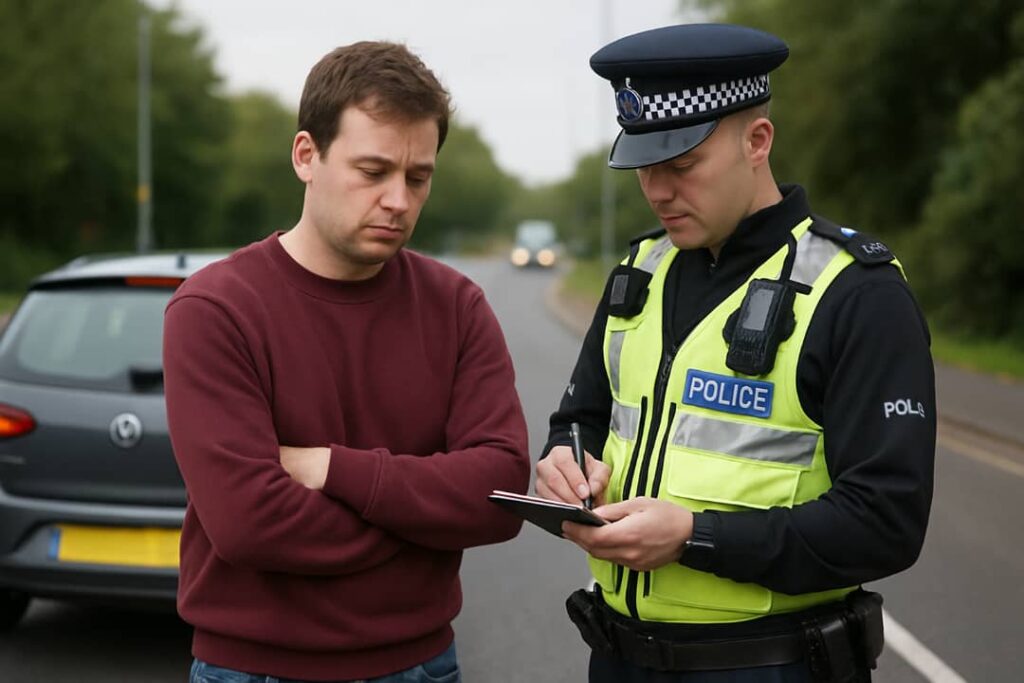
If you’ve just failed a breathalyser, you are likely feeling anxious, confused, and uncertain about what happens next. The immediate aftermath of a failed breathalyser is a critical period, where the decisions you make in the hours following the test can significantly affect the outcome of your case. At Scarsdale Solicitors, we provide clear guidance on exactly what to expect after a failed breathalyser and urgent legal representation to protect your rights from the moment of arrest through to court proceedings.
Understanding the breathalyser procedure and the steps following a failed breathalyser helps you navigate this stressful situation, make informed decisions, and avoid mistakes that could harm your defence. From roadside arrest to police station evidential testing and eventual court appearances, each stage involves specific procedures, rights, and opportunities for legal challenge that only experienced drink-driving solicitors can fully advise on. Learn more about our comprehensive criminal defence services.
This comprehensive guide explains every step after failing a breathalyser: immediate arrest procedures, police station breath test process, your legal rights, evidential testing requirements, charging decisions, and court proceedings. Whether you’ve failed a roadside preliminary breath test or station evidential test, understanding what comes next helps you protect your interests and prepare for the legal process ahead.
Just failed a breath test? Call our 24/7 emergency line immediately: 0161 660 6050 for urgent legal representation.
Understanding Different Types of Breathalyser Tests
Before examining what happens after a failed breathalyser, it is crucial to understand the difference between preliminary and evidential tests.
Two Types of Breath Tests
Preliminary Breath Test (Roadside)
- Purpose: Screening test indicating whether you are likely over the legal limit
- Device: Handheld portable breath testing device (roadside breathalyser)
- Location: Roadside, at the scene of the stop
- Legal Status: Not admissible as evidence in court
- Result: Pass or fail only (no specific reading usually given)
- Consequences:
- Pass: Free to continue your journey
- Fail: Arrested and taken to the police station for an evidential test
- Key Point: A roadside failed breathalyser does not provide evidence used to convict you; it only gives grounds for arrest.
Evidential Breath Test (Police Station)
- Purpose: Evidential test providing a precise alcohol reading used in court
- Device: Approved evidential breath testing machine (Lion Intoxilyzer, Evidential Breath Analyser)
- Location: Police station custody suite
- Legal Status: Admissible evidence in court proceedings
- Result: Precise reading in micrograms per 100ml of breath
- Consequences:
- Under 35 micrograms: Released, no further action
- 35+ micrograms: Charged with drink driving
- Key Point: This is the test that matters for prosecution. A roadside failed breathalyser only brings you to the police station.
To understand more about how criminal charges are brought and prosecuted, visit the Crown Prosecution Service website.
Stage 1: Immediate Aftermath – Failed Roadside Breath Test
What Happens Immediately
You’re Arrested
Following a failed roadside breath test, the police officer will:
- Formally Arrest You:
“You’re under arrest on suspicion of driving whilst over the prescribed alcohol limit.”
This is a clear statement confirming your arrest. - Caution You:
“You do not have to say anything, but it may harm your defence if you do not mention when questioned something which you later rely on in court. Anything you do say may be given in evidence.”
It is critical that you understand this caution. - Explain Why You’re Arrested:
The officer will state the grounds for your arrest, usually referencing the failed breathalyser. - Note the Time:
The time of arrest is recorded and may be important for establishing the timeline of events later.
What You Should Do
Do:
- Remain calm and cooperative
- Listen carefully to everything the police say
- Note officer details, including collar number and name
- Remember the exact time of arrest if possible
- Ask for legal representation immediately
Don’t:
- Argue or become confrontational
- Make any statements about alcohol consumption
- Estimate how much you drank
- Admit to drinking and driving
- Provide any explanations without legal advice
Critical Point: Anything you say from this moment can be used against you. Say nothing about alcohol consumption until you have legal representation.
For more information about your legal rights during arrest, visit Gov.uk’s guide to your rights at the police station.
Your Vehicle
What Happens to Your Car:
- You cannot continue driving as you are under arrest
- The police may seize your vehicle if no sober driver is available
- A friend or family member who is sober may collect it
- Otherwise, the vehicle may be recovered to a police pound (fees apply)
- Make safe arrangements for vehicle collection later
Vehicle Recovery Costs:
- Recovery fee: £150–£250
- Daily storage: £15–£30 per day
- Release requires proof of ownership and insurance
Search
Personal Search:
- The officer may search you for safety reasons
- They will check for weapons, contraband, or evidence
- Items are logged and placed in custody property
Vehicle Search:
- Police may search the vehicle for evidence
- They may look for open alcohol containers, drug paraphernalia, or documents
Stage 2: Transport to Police Station
Journey to the Station
What Happens:
- You are transported in a police vehicle, usually seated in the rear.
- Officers may ask questions, but you should say nothing without legal advice.
- The journey typically lasts 10–30 minutes.
Your Rights During Transport:
- Right to remain silent
- Not obliged to answer questions
- Anything you say can be used in evidence
- Reasonable treatment is expected
What You Should Do:
- Remain calm and cooperative
- Do not engage in conversation about drinking
- Do not make admissions
- Note any threats, inducements, or pressure
- Remember you are under arrest and do not attempt to leave
Common Police Questions (Do Not Answer Without Legal Advice):
- “How much have you had to drink?”
- “When did you last drink?”
- “Where were you drinking?”
- “Where are you coming from?”
Proper Response:
“I’d like to speak to a solicitor before answering questions.”
Stage 3: Arrival at Police Station – Booking In Process
Custody Sergeant Processing
Upon arrival, the custody sergeant (separate from the arresting officer) will process you following a failed breathalyser:
- Rights Explanation
You will be informed of three fundamental rights:
- Right to Free Legal Representation:
- Duty solicitor (free, available 24/7)
- Your own solicitor (free under legal aid for police station)
- Critical: always exercise this right
- Right to Have Someone Informed:
- Police will notify a friend or family member of your arrest
- They can assist with practical matters such as your vehicle or childcare
- Right to Consult Codes of Practice:
- Access to PACE Codes governing police procedures
- Available for consultation
Critical: Request legal representation immediately. Our 24/7 service: [Phone Number]
- Medical Assessment
The custody sergeant assesses whether you are:
- Fit to be detained
- Fit to be interviewed
- In need of medical attention
- Under the influence of alcohol or drugs (observation)
Medical issues you should mention include:
- Respiratory conditions (asthma, COPD)
- Panic attacks or anxiety
- Medication you take
- Recent food or drink
- Any other health concerns
- Personal Details Recorded
The sergeant records:
- Name, address, date of birth
- Contact details
- Next of kin
- Any vulnerabilities
- Property Logged
All personal property is recorded and secured:
- Wallet, phone, keys
- Jewellery, watches
- Vehicle documents
- Everything itemised on the custody record
- Photographs and Fingerprints
- Photograph taken
- Fingerprints recorded
- DNA sample may be taken
- Routine procedure for arrests
- Risk Assessment
Assessment includes:
- Risk of self-harm
- Risk of violence
- Medical needs
- Vulnerabilities
This determines cell placement and observation level.
Typical Booking Time: 15–30 minutes
Our police station representation service attends immediately during this critical period.
Stage 4: The 20-Minute Observation Period
Before an evidential breath test can proceed, a mandatory 20-minute observation period must be completed.
Purpose of Observation Period:
This ensures that any residual mouth alcohol does not contaminate the breath test, preventing falsely elevated readings from:
- Recent drinking (alcohol still in the mouth)
- Vomiting or regurgitation
- Burping, bringing stomach contents to the mouth
- Eating food containing alcohol
- Using mouthwash or breath fresheners
What Happens During 20 Minutes:
- Continuous Observation: An officer or detention officer will watch you constantly and you cannot leave their sight.
- Monitoring for contamination events.
You Must Not:
- Eat or drink anything
- Smoke or vape
- Use mouthwash or breath spray
- Chew gum
- Vomit or regurgitate
- Burp (inform the officer immediately if you do)
If Contamination Occurs:
The officer must restart the 20-minute period from the beginning. If you vomit or burp:
- Inform the officer immediately
- The 20 minutes will restart
This procedure is not intended to delay the test but to protect its accuracy.
Legal Requirement:
Police must observe the full 20-minute period; any shorter observation invalidates the test results.
Defence Opportunity:
If the observation period is incomplete or interrupted, evidential breath test results following a failed breathalyser may be challenged and excluded from evidence.
What You Should Do:
- Sit quietly and remain calm
- Do not eat, drink, or smoke
- Inform the officer if you burp, vomit, or have reflux
- Note the start and end times
- Remember if the observation period was interrupted
- Wait for your solicitor if they have not arrived
Stage 5: Evidential Breath Test Procedure
After the 20-minute observation period, you will provide an evidential breath sample.
The Testing Process:
- Legal Rights Reminder
Before testing, the custody sergeant confirms:
- You understand you are required to provide a specimen
- Failure without reasonable excuse is an offence
- You have the right to consult a solicitor before providing a specimen
Wait for Your Solicitor:
You are entitled to legal advice before testing. Do not proceed without speaking to a solicitor. Our 24/7 service ensures immediate attendance.
- Test Explanation
The officer will explain:
- Two breath samples must be provided
- Blow continuously until told to stop
- The lower of the two readings will be used
- The process takes several minutes
- Providing Breath Samples
- First Sample: Mouthpiece placed in the machine; take a deep breath and blow continuously. Machine analyses sample; reading displayed.
- Second Sample: New mouthpiece; repeat process. Reading displayed.
- Lower Reading Used: The lower reading is used for the charging decision, more favourable than the higher reading.
- Test Results
- Under 35 micrograms: Under legal limit; released with no further action.
- 35–39 micrograms: Over limit but low reading; special statutory option may apply.
- 40–50 micrograms: Over limit; statutory option to replace with blood or urine test.
- 51+ micrograms: Clearly over limit; no option to replace with blood or urine; charged based on breath reading.
- Breath Test Printout:
The machine produces a printout showing:
- Date and time
- Two readings (lower reading used)
- Officer and your details
You receive a copy, which is important evidence for your defence.
What If You Cannot Provide a Sample?
- Genuine Medical Reasons: Asthma, COPD, panic attacks, physical injuries affecting breathing. Inform the custody sergeant immediately; a medical examination will be arranged and an alternative blood or urine sample offered.
- Failure Without Reasonable Excuse: Refusing to provide a sample, not trying properly, or deliberately failing constitutes a separate offence, carrying the same penalties as drink driving. Never refuse without a valid medical reason.
Stage 6: The Statutory Option (40–50 Micrograms)
If your breath reading is between 40–50 micrograms following a failed breathalyser, you have a statutory option to replace the breath sample with a blood or urine test.
What Is the Statutory Option?
A legal right to elect a blood or urine sample instead of relying on the breath reading.
Why Choose This Option?
Potential Advantages:
- Blood tests are more accurate than breath tests
- Time delay may reduce alcohol level if still rising during breath test
- Mouth alcohol or GERD does not affect blood results
- Medical conditions have less impact on blood testing
Potential Disadvantages:
- Blood testing takes time to analyse, potentially delaying the case by weeks
- May still show over the legal limit (80mg per 100ml blood)
- Requires a needle procedure
- No guarantee of a better result
Decision Process:
- You must decide immediately at the station
- Solicitor advice is critical, considering timing of last drink, likelihood alcohol is still rising or falling, and any mouth alcohol or GERD factors
Blood or Urine Sample:
- Police decide which test, usually blood
- Taken by a doctor or registered nurse
- Two samples taken: one for police analysis, one for independent testing
No Statutory Option Available:
- Readings under 40: under limit, no charge
- Readings 51+: clearly over limit, no option
- Only available 40-50 microgram range
For more information about how criminal courts work, visit Citizens Advice’s guide to criminal courts.
Stage 7: Police Interview
After providing a breath sample, the police may interview you about the offence.
Interview Purpose:
The police aim to obtain evidence, including:
- Admissions about drinking
- Details of alcohol consumption
- Timing and location of drinking
- Reasons for driving
- Any explanations or defences
Your Rights in the Interview:
- Right to Legal Representation: A solicitor must be present. Do not proceed without legal advice. Our 24/7 service ensures immediate attendance.
- Right to Silence: You are not obliged to answer questions and may respond “no comment” to all questions. Silence cannot usually be used against you.
Interview Process:
- Recording: Interviews are digitally recorded. The date, time, and people present are stated, and the caution is repeated.
- Questions Police May Ask:
- What did you drink and when?
- How much did you consume?
- When did you stop drinking?
- Why were you driving?
- Did you know you were over the limit?
Solicitor Advice:
- Your solicitor will usually advise “no comment” to prevent inadvertent admissions. Police already have breath test evidence, and additional admissions only help the prosecution.
- Prepared statements may sometimes be read into the record, followed by “no comment” to questions.
What Police Are Looking For:
- Admissions of drinking and driving knowingly
- Estimates of consumption
- Reasons undermining potential defences
- Inconsistencies to challenge later
Best Approach: Follow your solicitor’s advice—typically responding “no comment” to protect your position after a failed breathalyser.
Stage 8: Charging Decision and Release
After breath testing and the interview, the custody sergeant will make a charging decision.
If Charged with Drink Driving:
- Formal Charge:
The sergeant reads the charge:
“You are charged that on [date] at [location] you drove a motor vehicle on a road, namely [road name], after consuming so much alcohol that the proportion of it in your breath, namely [reading] micrograms of alcohol in 100 millilitres of breath, exceeded the prescribed limit.” - Caution Response:
You are cautioned and asked if you have anything to say.
Correct response: “No comment” or “I’ll address this through my solicitor.” Do not make any statements—anything said can be used against you. - Charge Sheet:
You will be given a written charge sheet detailing:
- Full name and address
- Offence charged
- Date, time, and location
- Breath reading
- Court date and location
- Conditions of bail
- Bail Conditions:
- Usually released on unconditional bail: free to leave, must attend court, keep police informed of address changes
- Occasionally conditional bail: residence requirements, not to drive (rare pre-conviction), sign-in requirements at police station
- Court Date:
- First appearance usually 3–6 weeks from charge
- Often at a London magistrates’ court at 10am
- Must attend or a warrant may be issued
- Property Return:
- Personal property returned
- Vehicle arrangements discussed
- You cannot drive from the police station if still over the limit
Release Time: Typically 3–6 hours from arrival at the station, including observation, testing, interview, and charging.
Stage 9: After Release – Immediate Actions
Once released following a failed breathalyser, take immediate steps to protect your case:
- Contact a Specialist Solicitor:
- If you only had a duty solicitor at the station, contact a specialist drink driving solicitor immediately.
- Early instruction improves defence prospects.
- Call our 24/7 service: [Phone Number]
- Preserve Evidence:
- Breath Test Printout: Keep it safe, scan or photograph as a backup. Essential for your defence.
- Timeline Documentation: Write a detailed timeline while fresh in memory—what you drank, when, amounts, when you stopped drinking, and your driving route.
- Witness Details: Note anyone who can corroborate your timeline, including contact details.
- Consider Defence Strategies:
Potential defences may include:
- Hip flask (drinking after driving but before test)
- Rising alcohol (still absorbing at time of test)
- Mouth alcohol contamination
- GERD or medical conditions
- Procedural errors in testing
- Special reasons (laced drinks, emergencies)
Discuss all with a specialist solicitor.
- Employment Considerations:
- If you drive for work, inform your employer early and explore alternative duties.
- Do not resign hastily; many cases are successfully defended.
- Financial Preparation:
Potential costs may include:
- Legal fees (£1,500–£3,500)
- Court fines (£200–£1,000)
- Vehicle recovery (£150–£300)
- Increased insurance if convicted
- Arrange Transport:
You cannot drive while over the limit. Arrange:
- Family/friend collection from the station
- Taxi or public transport home
- Vehicle collection by a sober driver
Learn more about our experienced legal team and firm history.
Common Questions After Failing a Breath Test
Can I Drive After Failing a Breathalyser?
No. Absolutely not.
- You are over the legal limit.
- Driving while over the limit is a criminal offence.
- If stopped again, you could be charged with a separate offence.
- Insurance is invalid.
- Driving shows no remorse, which may be an aggravating factor at sentencing.
- Wait a minimum of 12–24 hours depending on alcohol consumed. Use online calculators cautiously or simply do not drive until the next day.
Will I Definitely Lose My Licence?
Not necessarily. Outcomes depend on:
- Whether you can successfully defend the charge
- Arguments based on special reasons
- Exceptional hardship applications
- Whether it is a “drunk in charge” or “driving” offence
Many factors affect the outcome. Expert legal advice is essential after a failed breathalyser.
How Long Until Court Date?
- Typically 3–6 weeks from charge to first appearance.
- Use this time to:
- Instruct a specialist solicitor
- Gather defence evidence
- Prepare mitigation
- Arrange character references
- Consider rehabilitation courses
Can I Go to Work Tomorrow?
- Yes, unless bail conditions prevent it (rare).
- You cannot drive if your job requires it.
- Inform your employer if necessary and consider alternative transport.
- Discuss your situation appropriately with your employer.
Should I Tell My Employer?
- Depends on your employment contract, company policies, and professional regulations.
- Driving requirements may influence disclosure.
- Always discuss with your solicitor before deciding.
What If I Have a Medical Condition?
- Conditions potentially affecting breath tests include:
- GERD (acid reflux)
- Diabetes
- Respiratory conditions
- Asthma
- Inform the custody sergeant immediately. Medical evidence can be important for your defence. Arrange GP or specialist appointments to document conditions.
What Happens at Court – Overview
First Appearance (3–6 weeks after charge):
- Arrive Early: 30 minutes before hearing
- Meet Solicitor: Discuss your case and plea
- Charges Read: Magistrates read allegations
- Plea Entered: Guilty or not guilty
- Prosecution Summary: Brief facts outlined
- Defence Mitigation (if guilty plea): Solicitor presents your case
Sentencing or Trial Date:
- Guilty Plea: Usually sentenced the same day
- Not Guilty Plea: Trial date set 6–12 weeks ahead
Likely Outcomes:
If Guilty Plea:
- Minimum 12-month driving ban
- Fine, typically £200–£600
- Criminal conviction
- Possible rehabilitation course offer
If Not Guilty Plea:
- Trial date set
- Continue on bail
- Defence evidence prepared
- Trial usually lasts 2–3 hours
Special Reasons / Exceptional Hardship:
- Additional hearing after conviction
- Evidence presented (witnesses, documents)
- Court decides whether to reduce or avoid a ban
Our court representation services provide expert advocacy throughout proceedings.
Frequently Asked Questions
What happens if you fail a breathalyser test UK?
If you have a failed breathalyser, you will be arrested immediately following a roadside preliminary test and taken to a police station for an evidential breath test. At the station, there is a mandatory 20-minute observation period before you provide two evidential breath samples. If your reading exceeds 35 micrograms, you will be charged with drink driving. You will receive a court date 3–6 weeks later and will be released on bail, but cannot drive your vehicle from the station. Typical time at the station is 3–6 hours. Penalties upon conviction include a minimum 12-month driving ban, a fine, and a criminal record. Legal representation is essential from the moment of arrest after a failed breathalyser.
Can you challenge breath test results?
Yes. Breath test results are challengeable through various strategies:
- Device calibration issues – if the breathalyser was not properly calibrated or maintained
- Procedural errors – such as an incomplete 20-minute observation period or incorrect operation
- Contaminated sample – mouth alcohol, GERD, or recent consumption
- Medical conditions – such as diabetes or reflux affecting readings
- Device malfunction
Challenging the reliability or procedure can exclude the breath test evidence, potentially leading to case dismissal. Early specialist legal advice is critical to identify defence opportunities after a failed breathalyser.
What is the 20-minute observation period?
Before the evidential breath test, a mandatory 20-minute observation period ensures mouth alcohol does not contaminate results. An officer must observe continuously that you do not eat, drink, smoke, vomit, burp, or use mouth products. If contamination occurs, the 20 minutes restarts. An incomplete observation period may render test results challengeable or inadmissible. Always note the exact timing for potential defence challenges.
What happens during a police station breath test?
The station procedure following a failed breathalyser includes:
- 20-minute observation period
- Rights explanation and solicitor consultation
- Test explanation
- Providing two breath samples by blowing continuously
- Machine analysis and display of readings
- Lower reading used for charging
- Printout showing results
Reading outcomes:
- Under 35 micrograms: released with no further action
- 40–50 micrograms: statutory option for blood test
- 51+ micrograms: charged based on breath reading
Refusal to provide a sample without a valid medical reason is treated as a separate offence, carrying the same penalties as drink driving. Solicitor presence ensures rights are protected and procedures correctly followed.
Should I request a blood test instead of a breath test?
The blood test option is only available if your breath reading is 40–50 micrograms (“statutory option”). Consider blood testing if:
- Alcohol may still be rising
- Mouth alcohol or GERD may affect results
- Medical conditions affect breath testing
- Breath reading is close to 40 micrograms
Do not choose blood testing if your reading is close to 50 micrograms or you stopped drinking hours ago. Solicitor advice is critical; the decision must be made immediately at the station.
What happens if I refuse a breathalyser?
Refusing the breath test without a reasonable medical excuse is a separate criminal offence called “failing to provide a specimen.” It carries the same penalties as drink driving, including a minimum 12-month ban, fine, and criminal conviction. Only refuse if there is a genuine medical reason, such as severe asthma, COPD, panic attacks, or physical inability. Inform the custody sergeant immediately so a medical examination can be arranged and alternative blood/urine testing offered.
How long after failing a breath test until court?
Typical timeline:
- Arrest and transport to station: 0–1 hour
- Observation and testing: 2–4 hours
- Interview and charging: 1–2 hours
- Released on bail: total 3–6 hours at station
- First court appearance: 3–6 weeks from charge date
Use this time productively to instruct a specialist solicitor, gather evidence, prepare mitigation, and arrange references. Early legal advice maximises defence prospects after a failed breathalyser.
Can I drive the day after failing a breathalyser?
Technically, you can drive once your alcohol level is below the legal limit, usually 12–24 hours depending on consumption. However:
- Insurance may be affected by a pending charge
- Driving too soon can be an aggravating factor if stopped again
- Alternative transport is safer until the case is resolved
- If convicted, the minimum ban is 12 months
- If acquitted, driving may resume
One unit of alcohol generally takes one hour to process; calculate conservatively to ensure safety and compliance.
Get Immediate Legal Help After Failing a Breath Test
If you’ve just failed a breath test or are currently at a police station, getting immediate specialist legal representation is critical for protecting your rights and building your defence.
Why immediate action matters:
The hours immediately after arrest are critical. Decisions made at the police station affect your entire case. Without expert legal advice you risk:
- Making admissions that harm your defence
- Missing defence opportunities
- Accepting incorrect procedures
- Not exercising important rights
Contact our 24/7 emergency service now:
📞 24/7 Emergency Line: 0161 660 6050
📧 Email: Info@scarsdalesolicitors.com
📍 Office Address: Reed House, 3–4 Hunters Lane, Rochdale, Greater Manchester, OL16 1YL
🌐 Website: www.scarsdalesolicitors.com Or complete our online contact form for a callback within hours.
What we provide:
- Immediate Police Station Attendance: Within 1 hour anywhere in London
- Free Police Station Representation: Under legal aid regardless of income
- Rights Protection: Ensure police follow correct procedures
- Interview Advice: Guidance on whether to answer questions
- Defence Strategy: Early identification of defence opportunities
After charge, we provide:
- Comprehensive case review
- Evidence gathering and investigation
- Expert witness instruction if needed
- Court representation
- Special reasons/exceptional hardship applications
- Fixed fee options available
Time-sensitive actions:
- Breath test procedures must be documented immediately
- Defence evidence needs securing while fresh
- Witness statements required while memories are accurate
- Medical evidence is arranged promptly
- Early preparation maximises success prospects
Don’t navigate this alone. Many clients achieve successful outcomes through expert representation who would have been convicted without specialist help.
Learn more about our police station representation and 24/7 emergency legal services.
Call Now: 0161 660 6050
Protect your rights and your licence with immediate specialist legal representation.