What is the legal limit for cocaine when driving in the UK?
The UK legal limit for cocaine when driving is 10 micrograms per litre of benzoylecgonine in blood — the metabolite produced when the body breaks down cocaine. The limit is set by the Drug Driving (Specified Limits) (England and Wales) Regulations 2014 and applies under section 5A of the Road Traffic Act 1988. A separate, much higher limit of 50 micrograms per litre exists for cocaine itself as the parent drug, but the metabolite reading is the one that triggers prosecution in almost every case, because benzoylecgonine remains in blood far longer than cocaine. The same limits apply in Scotland and Northern Ireland, though the enabling regulations are different.

 4.6Top Rated Service 2026verified by TrustindexTrustindex verifies that the company has a review score above 4.5, based on reviews collected on Google over the past 12 months, qualifying it to receive the Top Rated Certificate.


High
Client’s Success
0
Successful Cases
Start Today
Enter your details below for a free initial call.
High Success Rate
No Hidden Charges
A Truly Personal Touch
Language Support
If you have been charged with drug driving on a cocaine reading, the question is rarely whether the limit is correct — it is whether the reading is reliable and whether the procedure that produced it withstands legal challenge. See the complete guide to cocaine and UK roadside drug testing for the wider picture, or speak to a cocaine drug driving solicitor about your case.
What is the legal limit for cocaine when driving in the UK?
The UK legal limit for cocaine when driving is 10 micrograms per litre (10μg/L) of benzoylecgonine measured in blood. Benzoylecgonine is the principal metabolite of cocaine — the chemical the liver produces as it breaks the drug down. The limit was set by the Drug Driving (Specified Limits) (England and Wales) Regulations 2014 and came into force on 2 March 2015, alongside specified limits for sixteen other controlled drugs.
This is a strict liability offence under section 5A of the Road Traffic Act 1988. The prosecution does not have to prove that the driver was impaired or that their driving was affected. The prosecution only has to prove three things: that the person was driving, attempting to drive, or in charge of a motor vehicle on a road or other public place; that a specified controlled drug was in the body; and that the concentration of that drug exceeded the specified limit.
For cocaine, the parent drug itself has a separate, higher limit of 50μg/L. In practice, the parent-drug limit is rarely the one that triggers prosecution. Cocaine has a short half-life in blood — typically 60 to 90 minutes — and concentrations drop below 50μg/L within hours of use. Benzoylecgonine has a half-life of several hours and remains detectable in blood for two to four days after use, depending on dose and frequency. The metabolite is the practical enforcement target, which is why most cocaine drug driving prosecutions rest on a benzoylecgonine reading rather than a cocaine reading.
The same numerical limits apply in Scotland (under the Drug Driving (Specified Limits) (Scotland) Regulations 2019, in force from 21 October 2019) and in Northern Ireland (under the equivalent Northern Ireland regulations introduced in 2016, although enforcement has been slower to bed in). The Republic of Ireland operates a different framework with its own threshold values under Irish law and is not covered by UK regulations.
Why is the limit set on benzoylecgonine, not cocaine itself?
The choice of metabolite over parent drug was deliberate, and the reasoning is partly pharmacokinetic and partly practical for enforcement.
Cocaine is rapidly metabolised by plasma cholinesterases and liver enzymes into two main inactive metabolites: benzoylecgonine and ecgonine methyl ester. Benzoylecgonine is the more useful biomarker because it appears in blood within minutes of cocaine entering the system, persists for two to four days in most users, and is highly specific to cocaine use. Nothing else in normal human metabolism produces benzoylecgonine.
If the law had been set on the parent drug alone at a low threshold, enforcement would have been almost impossible. Cocaine concentrations in blood fall quickly. By the time a driver is stopped at the roadside, transported to a custody suite, and a blood sample is drawn (typically 60 to 120 minutes from the initial stop), the parent-drug concentration has often dropped below any sensibly enforceable level. The metabolite reading remains stable across that timeline.
The Department for Transport, in the consultation that preceded the 2014 regulations, considered three thresholds for benzoylecgonine: a zero-tolerance “lowest accidentally ingestible” level around 1μg/L, an “impairment-based” level around 25μg/L drawing on Australian research, and an intermediate level. The 10μg/L figure was chosen as the level above which incidental or passive exposure is implausible, but which does not require evidence of impairment. The intent in the consultation papers was a level that effectively prohibits driving after recreational cocaine use without setting the bar so low that contamination scenarios become a real risk.
Some readers ask the question as “is there a driving limit for coccaine?” — the typo is common in search data. The answer is the same: yes, there is a UK driving limit specifically for cocaine and its metabolite, set at the levels above.
The Drug Driving (Specified Limits) (England and Wales) Regulations 2014 explained
The 2014 regulations are short. They consist of a single substantive table that specifies, for each of seventeen controlled drugs, the maximum concentration permitted in blood for the purposes of section 5A of the Road Traffic Act 1988.
The seventeen drugs split into two groups. Eight illegal drugs are listed with very low “zero-tolerance plus a small margin” limits: benzoylecgonine (10μg/L), cocaine (50μg/L), delta-9-tetrahydrocannabinol or THC (2μg/L), ketamine (20μg/L), lysergic acid diethylamide or LSD (1μg/L), methylamphetamine (10μg/L), methylenedioxymethamphetamine or MDMA (10μg/L), and 6-monoacetylmorphine (a heroin metabolite, 5μg/L). Eight prescription medications are listed with limits set high enough to allow normal therapeutic use: clonazepam (50μg/L), diazepam (550μg/L), flunitrazepam (300μg/L), lorazepam (100μg/L), methadone (500μg/L), morphine (80μg/L), oxazepam (300μg/L), and temazepam (1000μg/L). Amphetamine was added later at 250μg/L.
The legal structure matters because it is not the same as the drink-driving framework. Section 5A is a per se offence: the prosecution proves the concentration and the offence is established. Section 4 of the same Act covers driving while impaired by drugs, and that is a separate offence that does require impairment evidence. A driver can in theory face both charges from the same incident — but in cocaine cases, the section 5A route is almost always used because it is easier to prove and carries the same penalty range.
There is a statutory defence under section 5A(3) of the Road Traffic Act 1988 for prescription medications taken in accordance with medical advice, but it does not extend to illegal drugs. There is no “medical use” defence for cocaine in the UK. The narrow exception is medical cocaine used as a topical anaesthetic in ENT surgery, and that only assists if the patient was the subject of the procedure, the timing of the surgery is documented, and the elevated reading can be attributed to medical administration rather than recreational use. This defence is rare in practice.
Is there a separate legal limit for cocaine itself?
Yes — but the parent-drug limit rarely controls prosecution outcomes.
The 2014 regulations specify 50μg/L for cocaine as the parent drug. This is five times higher than the metabolite limit. The reason is the pharmacokinetic asymmetry already discussed: cocaine concentrations peak rapidly after use and decline within hours, while benzoylecgonine concentrations rise more slowly and persist for days. By the time most blood samples are drawn, cocaine has usually fallen below 50μg/L even where benzoylecgonine remains well above 10μg/L.
In a typical case the blood report shows two readings: one for cocaine itself (often below the 50μg/L limit by the time of the draw) and one for benzoylecgonine (above 10μg/L). The prosecution proceeds on the benzoylecgonine reading because that is the limit that has been exceeded. The cocaine reading is corroborative — it shows the metabolite came from cocaine specifically rather than from any other source — but it is not the operative reading.
Where the parent-drug reading does matter is in cases where blood is drawn unusually quickly after use (for example, immediately after a serious road traffic collision where the driver is taken to hospital and a blood sample is drawn within 30 minutes of the incident). In those cases the cocaine reading itself may exceed 50μg/L and supports prosecution on either basis.
For the technical detail of how the cocaine and benzoylecgonine readings are produced, see the station blood test that measures benzoylecgonine. For the reliability of the reading and the conditions under which it can be challenged, see challenging the reliability of the analytical reading.
How does the UK cocaine drug driving limit compare to other jurisdictions?
Across the UK the numerical limit is uniform. England, Wales, Scotland and Northern Ireland all apply 10μg/L of benzoylecgonine and 50μg/L of cocaine. The enabling regulations differ — the 2014 regulations cover England and Wales, the 2019 regulations cover Scotland, and the Northern Ireland regulations cover that jurisdiction — but the substantive limit is the same.
The Republic of Ireland operates an entirely separate regime under Irish road traffic legislation, with its own threshold values and enforcement approach. A driver who is over the UK limit is not automatically over the Irish limit and vice versa. Cross-border drivers should not assume the figures travel.
Among other European jurisdictions the position varies widely. Germany has a 10ng/mL (10μg/L) limit for benzoylecgonine that mirrors the UK figure. The Netherlands applies threshold limits but with different decision rules around impairment. France operates a zero-tolerance regime that prohibits any detectable concentration of an illegal drug. Many US states operate impairment-based offences without specified per se limits, while others (Colorado, Washington, Nevada and others) apply per se thresholds — though for different drugs (THC is the focus there) and at different levels.
What this means in practice is that “I’m not over the limit in country X” rarely transfers usefully to a UK case. The UK figure is the figure that applies on UK roads, regardless of where the driver is normally licensed or where they last used the substance.
How is the limit enforced and how can you defend a case where you're over it?
The enforcement chain is the same regardless of which substance triggers the stop. A roadside saliva test screens for the presence of the drug. A positive saliva reading is grounds for arrest on suspicion of drug driving under section 5A. The driver is transported to a custody suite and a healthcare professional draws a blood sample (or, where blood cannot be taken for documented medical reasons, a urine sample). The sample is sent to an accredited forensic laboratory for analysis. The laboratory produces a quantitative reading and a certificate of analysis. The reading either exceeds the specified limit or does not, and the prosecution decision is taken on that basis.
Because the offence is strict liability, the practical defence routes are narrow. There is no impairment defence — being unimpaired is irrelevant if the reading is over the limit. There is no recency defence — it does not matter if the cocaine was used days ago, only that the metabolite reading at the time of the sample exceeded 10μg/L. There is no quantity defence — small amounts that nevertheless produce a reading above the limit still trigger the offence.
What can be challenged is the reliability of the reading and the lawfulness of the procedure. The four routes that come up most often: the chain of custody from sample collection to laboratory analysis (was the sample correctly sealed, labelled, transported, stored, and processed?); the calibration and quality control of the laboratory equipment at the time of analysis (was the instrument within calibration tolerance, were quality controls run, were the controls within acceptable limits?); the procedural compliance of the police process (was the arrest lawful, was the blood sample taken by a qualified healthcare professional, was the second-sample offer made, was the caution given correctly?); and where appropriate, the analysis of the optional second blood sample by an independent forensic laboratory.
These are technical challenges that rely on disclosure of the prosecution’s analytical evidence and, in many cases, the instruction of an independent forensic toxicologist. The window for defence preparation is short — the first court appearance is typically four to twelve weeks after charge, and applications for independent analysis of the retained second sample have time limits. Acting early matters. For wider context on the offence framework and sentencing, see the wider drug driving offence framework and the drug driving sentencing guidelines. Where a prescription medication is also in play, the parallel prescription medication framework sets out the section 5A(3) statutory defence in detail.
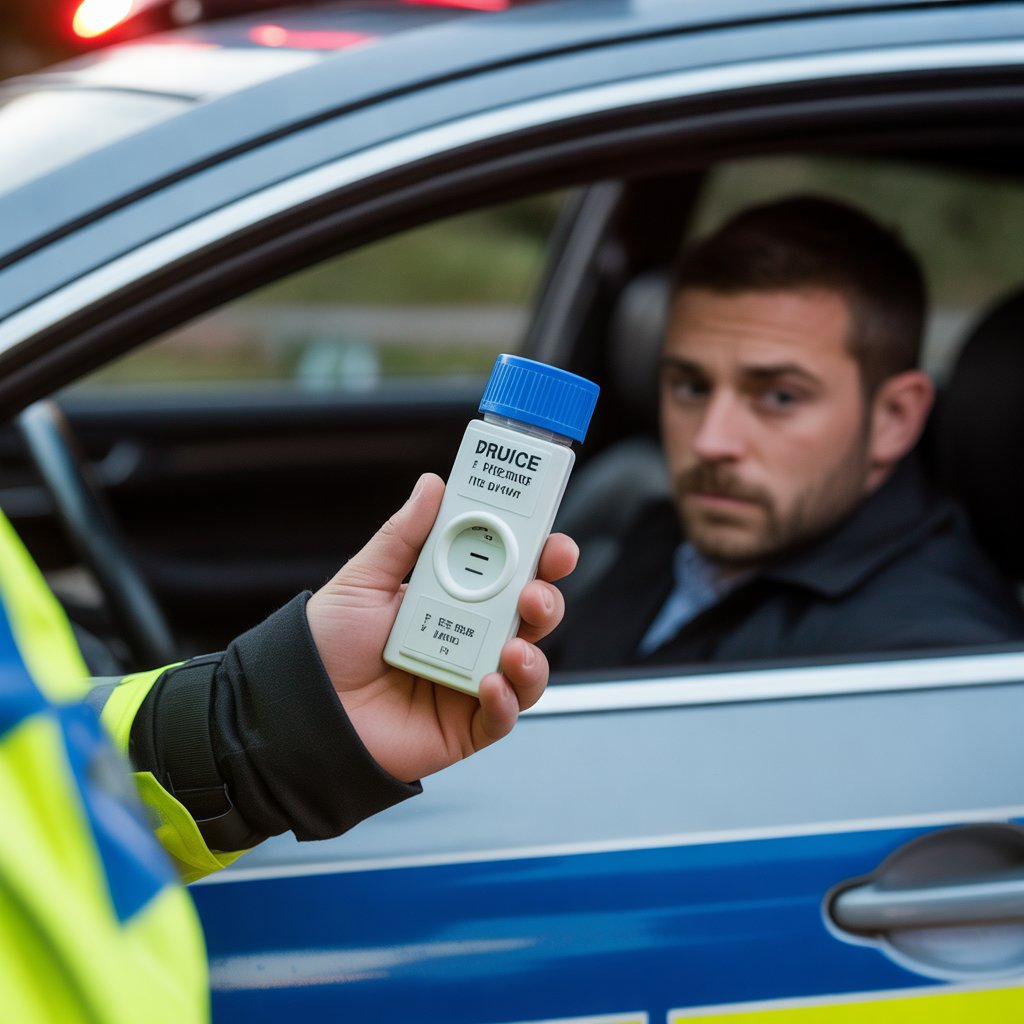
The two roadside elements that often come up — the saliva swab itself and the DrugWipe roadside device used to administer it — are screening tools, not conviction evidence. Many defendants assume the roadside test is what put them over the limit. It is not. The 10μg/L threshold is read off the station blood test alone. The roadside saliva screening test only establishes the legal basis for arrest. If you have been charged and the reading is over 10μg/L, the next step is a free confidential consultation with a drug driving solicitor who can review the prosecution evidence in detail.
Frequently asked questions
Why is the UK cocaine drug driving limit set so low at 10μg/L?
The 10μg/L benzoylecgonine threshold was chosen to be above plausible passive-exposure or accidental-contamination levels but below the level that would require proof of impairment. The Department for Transport’s pre-2015 consultation papers describe the figure as a level that effectively prohibits driving after recreational cocaine use without producing the analytical instability of a zero-tolerance limit. It is not an impairment-based figure: research on cocaine impairment thresholds points to higher concentrations, but the section 5A offence is structured as a per se offence rather than an impairment offence.
What is benzoylecgonine in plain English?
Benzoylecgonine is what the body produces when the liver and blood enzymes break cocaine down. It is chemically inactive — it does not produce a high or affect driving the way cocaine itself does. It is useful for drug testing because it is specific to cocaine (no other normal substance produces it), it appears in blood within minutes of cocaine use, and it remains detectable for several days. The UK drug driving limit is set on benzoylecgonine because of these three properties.
Can you be over the legal limit hours after using cocaine?
Yes, and this is the position most defendants find themselves in. Benzoylecgonine has a half-life of several hours in blood and remains above 10μg/L for two to four days after recreational use in most users, longer in heavy or chronic users. A driver who used cocaine on Friday evening can easily test over the limit on Sunday morning even with no recent use and no impairment.
What’s the difference between the cocaine limit and the drink driving limit?
The drink-driving limit (80mg of alcohol per 100ml of blood in England and Wales) is an impairment-correlated figure: research links that level to measurable driving impairment in most adults. The cocaine limit (10μg/L of benzoylecgonine) is a presence-correlated figure: it indicates recent cocaine use but does not by itself prove impairment. The drink-driving offence under section 5 of the Road Traffic Act 1988 is structurally similar to the drug-driving offence under section 5A — both are per se offences that do not require impairment evidence — but the underlying rationale for the threshold is different.
Is the cocaine limit the same in Scotland, Wales and Northern Ireland?
Yes. The same numerical limits (10μg/L benzoylecgonine, 50μg/L cocaine) apply across England, Wales, Scotland and Northern Ireland. The enabling regulations differ by jurisdiction — the 2014 regulations cover England and Wales, the 2019 regulations cover Scotland, and the Northern Ireland regulations cover that jurisdiction separately — but the substantive limit is uniform. The Republic of Ireland operates an entirely separate framework with its own threshold values.
Can prescription medication put me over the cocaine limit?
Almost never. Benzoylecgonine is highly specific to cocaine — no commonly prescribed medication produces benzoylecgonine in the body. The narrow exception is medical cocaine itself, used as a topical anaesthetic in some ENT (ear, nose and throat) surgical procedures. A patient who has had recent ENT surgery involving cocaine can in principle test over the limit, and where this is documented in the medical record it provides material grounds for a defence challenge. Pseudoephedrine, lidocaine and other commonly cited “false positive” medications do not produce benzoylecgonine.
What happens if my reading is just over 10μg/L?
A reading of 11μg/L produces the same legal consequence as a reading of 110μg/L: a section 5A offence has been committed, and the sentencing range starts at a minimum 12-month disqualification, a fine, and a criminal record. Sentencing guidelines do allow the magistrates to consider the reading level as one factor in deciding the appropriate sentence within the range, but the conviction itself does not turn on how far over the limit the reading is. Where the reading is marginal, defence challenges focused on analytical uncertainty (laboratory measurement uncertainty is typically expressed as ±15% to ±20%) can sometimes bring the reading below the limit and produce an acquittal.
Does the limit allow for individual variation?
No, the limit does not adjust for body weight, sex, age, metabolic rate, or use pattern. It is a flat numerical threshold that applies to every driver. The pharmacokinetic variation between individuals — some clear benzoylecgonine faster than others, some accumulate higher concentrations from the same dose — is not built into the legal framework. This is one of the structural features of a per se offence that distinguishes it from an impairment offence: the law trades individual fairness for prosecution simplicity.